Conventional Current
Conventional current direction is the flow of positive charge, but in reality, current is the flow of negative charge (electrons) known as electron flow direction. Most laws are based around conventional current direction.
Voltage
-
Voltage is an electrical potential difference between two points, i.e. the voltage difference
-
One volt requires one joule of energy to move one coulomb of charge from one point to another
is work, and is charge -
! () denotes point of higher potential and () denotes lower potential
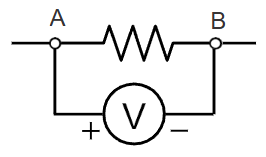
Reading Voltmeters if positive () end is connected to higher potential → a voltage drop will be read as positive:
If voltage drops 23 V from A to B, than the voltmeter reads +23
Introduction to Basic Circuit Elements
- An electric circuit consists of many interconnected elements
- Circuit analysis is the process of determining voltage and/or current of the elements
Voltage Sources
Voltage sources are the electrical elements which are capable of injecting energy to the circuit by creating a voltage rise
- The direction of voltage sources are named voltage polarities
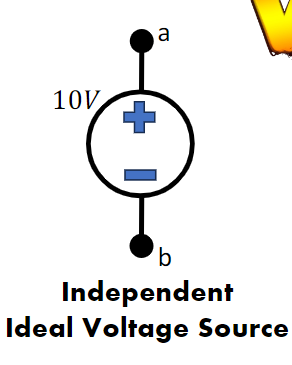
- Plus (+) sign indicates high potential side
- Minus (-) sign indicates low potential side
Ideal Voltage Sources
An ideal voltage source is a pure voltage source with no loss or storage characteristics
- It creates the specified voltage across its terminals regardless of which current it has to drive through the circuit
- These do not exist in reality
Independent versus Dependent
An independent ideal voltage source is an element that provides a specified voltage that is completely independent of other circuit elements.
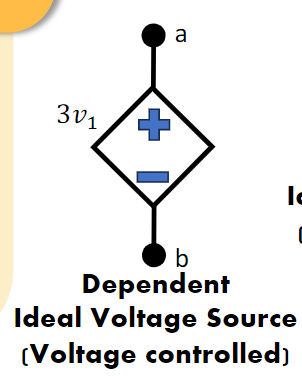
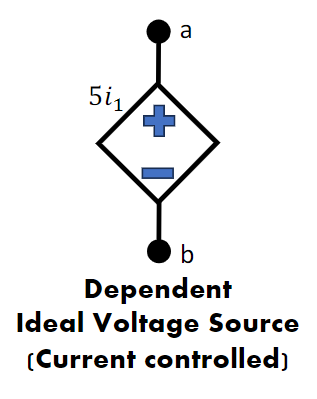
A dependent ideal voltage source is an element in which the supplied voltage is controlled by another voltage or current.
IndependentVsDependentVSource
⚠ Switch to EXCALIDRAW VIEW in the MORE OPTIONS menu of this document. ⚠ You can decompress Drawing data with the command palette: ‘Decompress current Excalidraw file’. For more info check in plugin settings under ‘Saving’
Excalidraw Data
Text Elements
Vs.
Embedded Files
9fe13679690d520850c3a813310d8e35a37b3347: IndependentVoltage.png
b043f9bdf313dce6d1d1d348378068daa13a485a: DependentVoltage1.png
07cc2bad181fe0b05a09b252a7920e8357a20a37: DependentVoltage2.png
Link to original
Current Sources
Current sources are the electrical elements which are capable of injecting energy to the circuit by creating a current
- Direction of current sources is indicated by the arrow
Ideal Current Sources
An ideal current source is a pure current source, with no loss or storage characteristic
- Will create specified current flowing in/out terminals, regardless of voltage across its terminals
Independent versus Dependent current sources are the same as seen above in Voltage Sources
Resistors
- All materials resist flow of electric charge -> this is known as resistance, represented by symbol
- The unit for resistance is ohm ()
- Used to describe how hard it is for a current to flow through an element
- Resistors are used to model the current-resisting behaviour of a materials
- Resistors dissipates energy from system as heat
- Voltage is dropped when current flows through
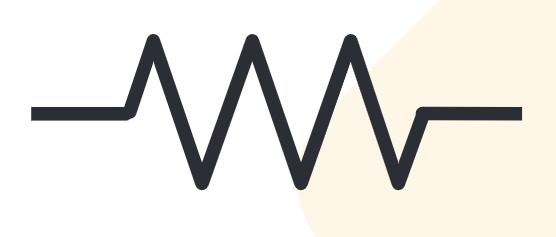
Resistor in a circuit diagram:
Conductance
-
The reciprocal of resistance is known as conductance ()
Units for conductance is Siemens () -
describes how easy a current flows through an element
An open circuit is a circuit element where
- The current flowing through is 0
A short circuit is a circuit element where - The voltage across short circuit is 0
Capacitors and Inductors
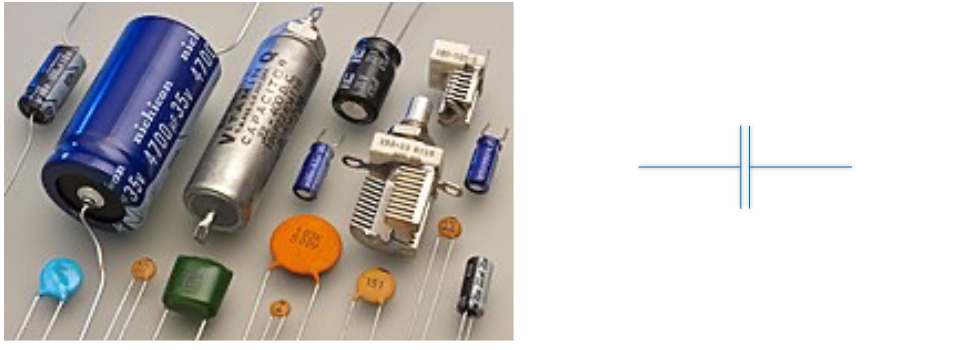
- A capacitor stores energy in an electrical field when a voltage is applied across it
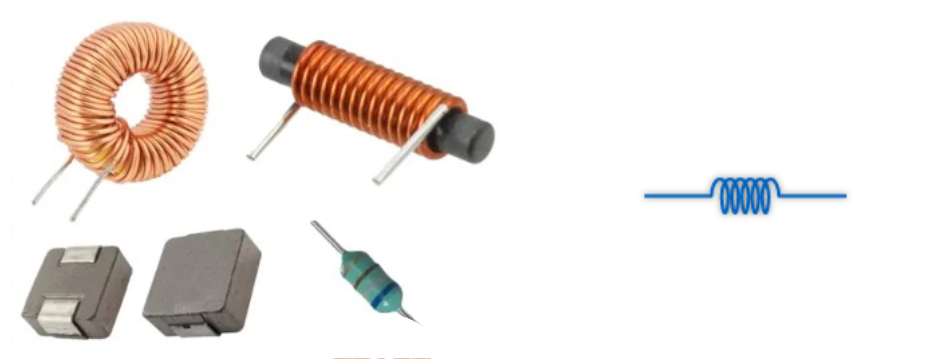
- An inductor stores energy in a magnetic field when a current is flowing through it
Active vs Passive Elements
- Active elements generate electrical power
- Current increases potential when flowing through
- Passive elements cannot generate electrical power
- Current decreases potential when flowing through
Increase in potential -> increase in energy!
Ohm’s Law
Ohm’s Law makes a number of assumptions:
- Material is linear
- Contacts between resistor and wires has no effect on circuit
- Power supply is ideal
- Current source will supply any voltage needed
- Voltage source will supply any current needed
Ohm’s Law only applies to resistor!