State Space Graph
-
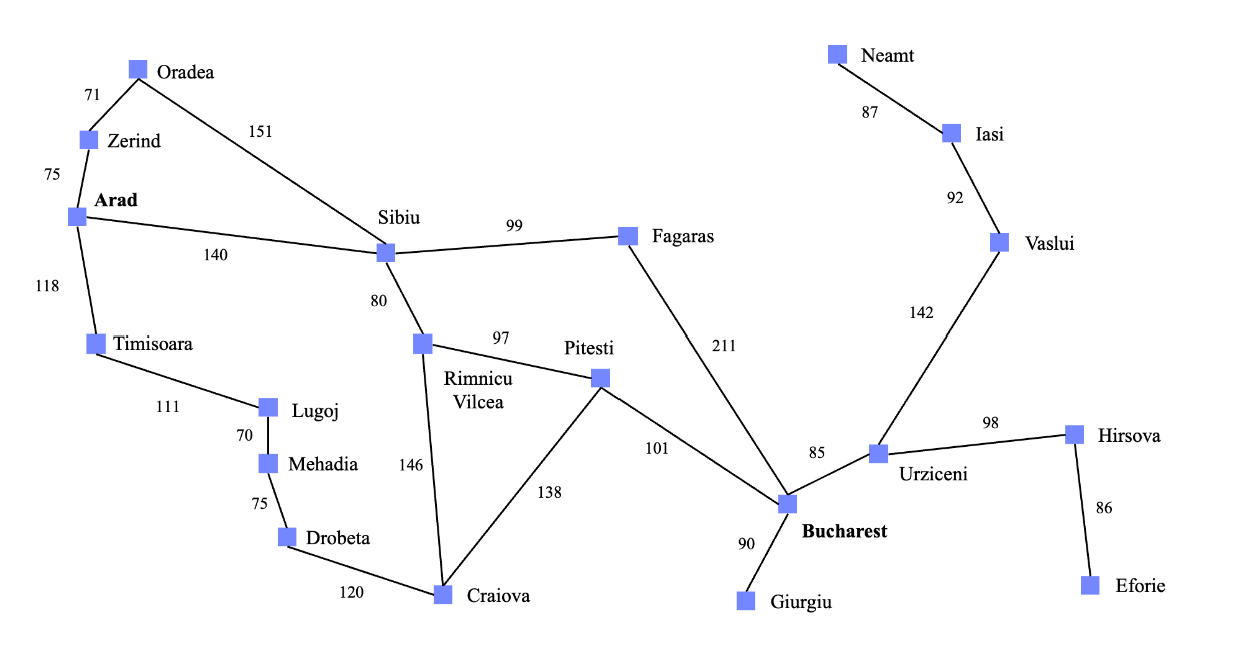
State space graph is a formal representation of a search problem
- Nodes are states
- Edges are successor functions
Search Tree
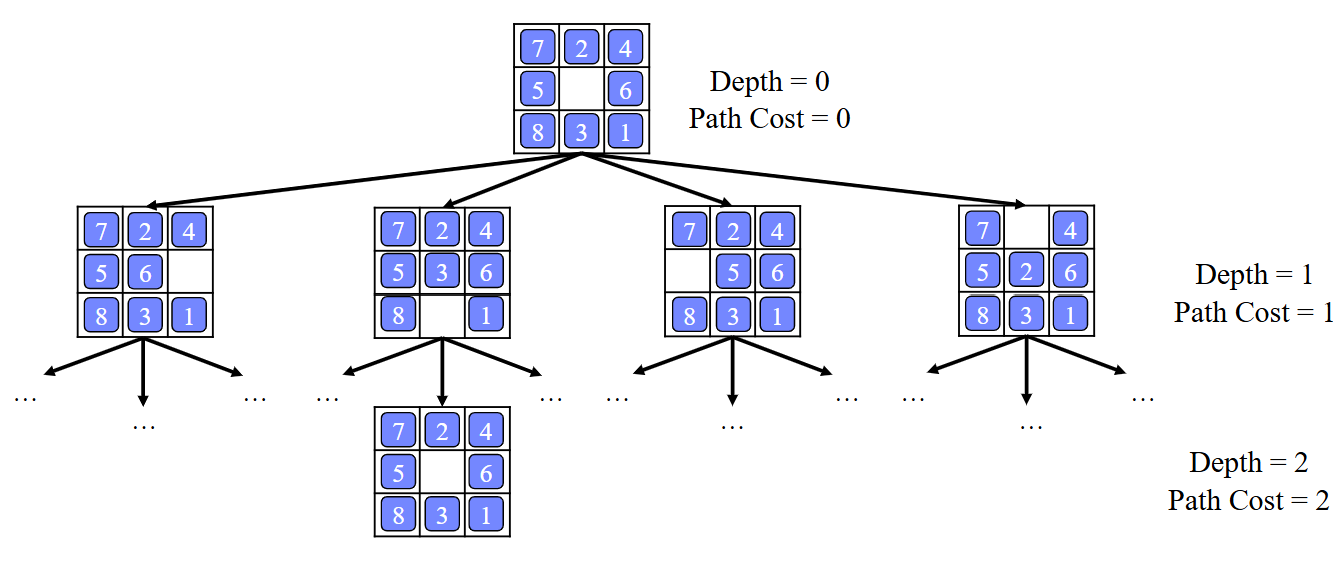
- Search tree is a tree of plans, searching on a state space graph
- Represents paths in the state space graph
- In the tree, each state can appear multiple times
-
Nodes represent states
- Starting state is the root
- Children are from the successor function
-
Path cost is the accumulative cost along the path
See more: Trees
Uniformed Search Strategies
Breadth-First Search
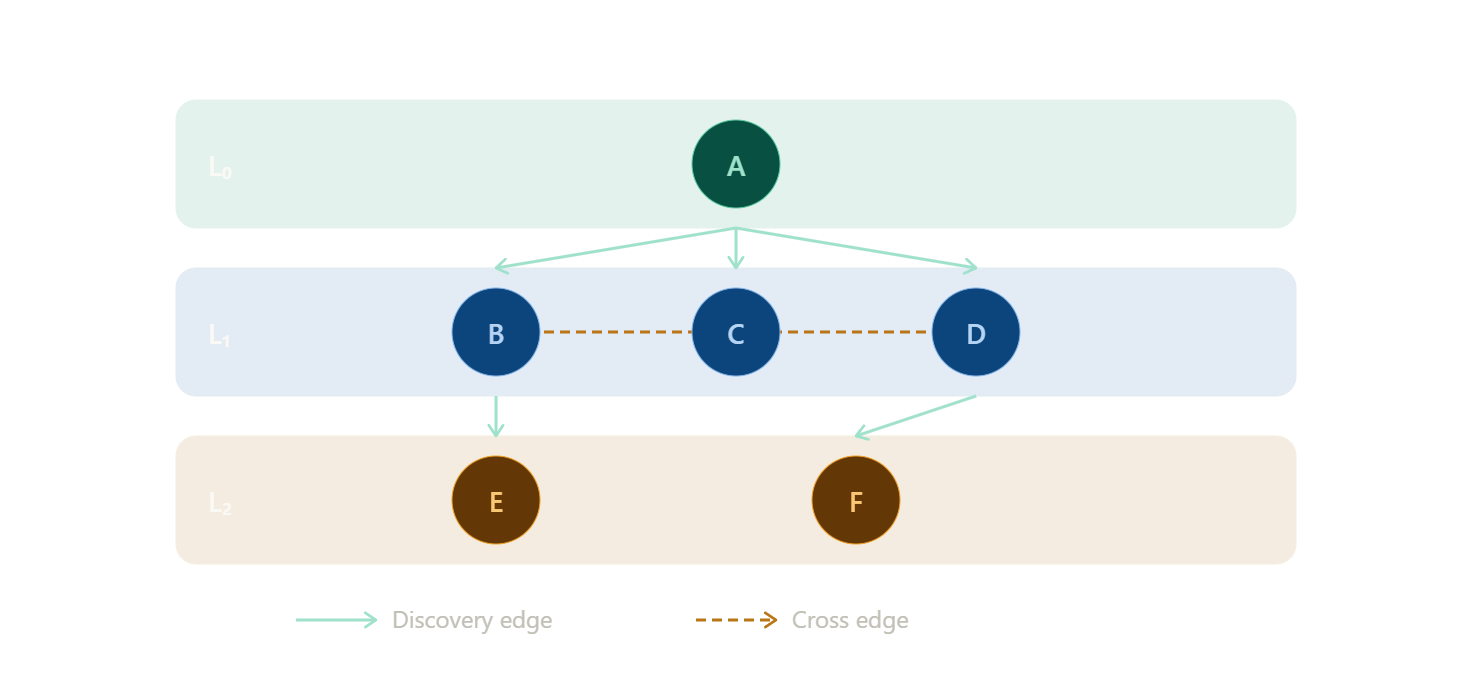
- Breadth-First Search (BFS) is a traversal technique that explores rooted trees and graphs layer by layer
- Vertices are separated in different levels
- Begins at a starting vertex
As BFS explores, edges get classified:
- Discovery edge leads to an unexplored vertex
- Cross edge connects two already-visited vertices at the same or adjacent level
Link to original
Uniform Cost Search
-
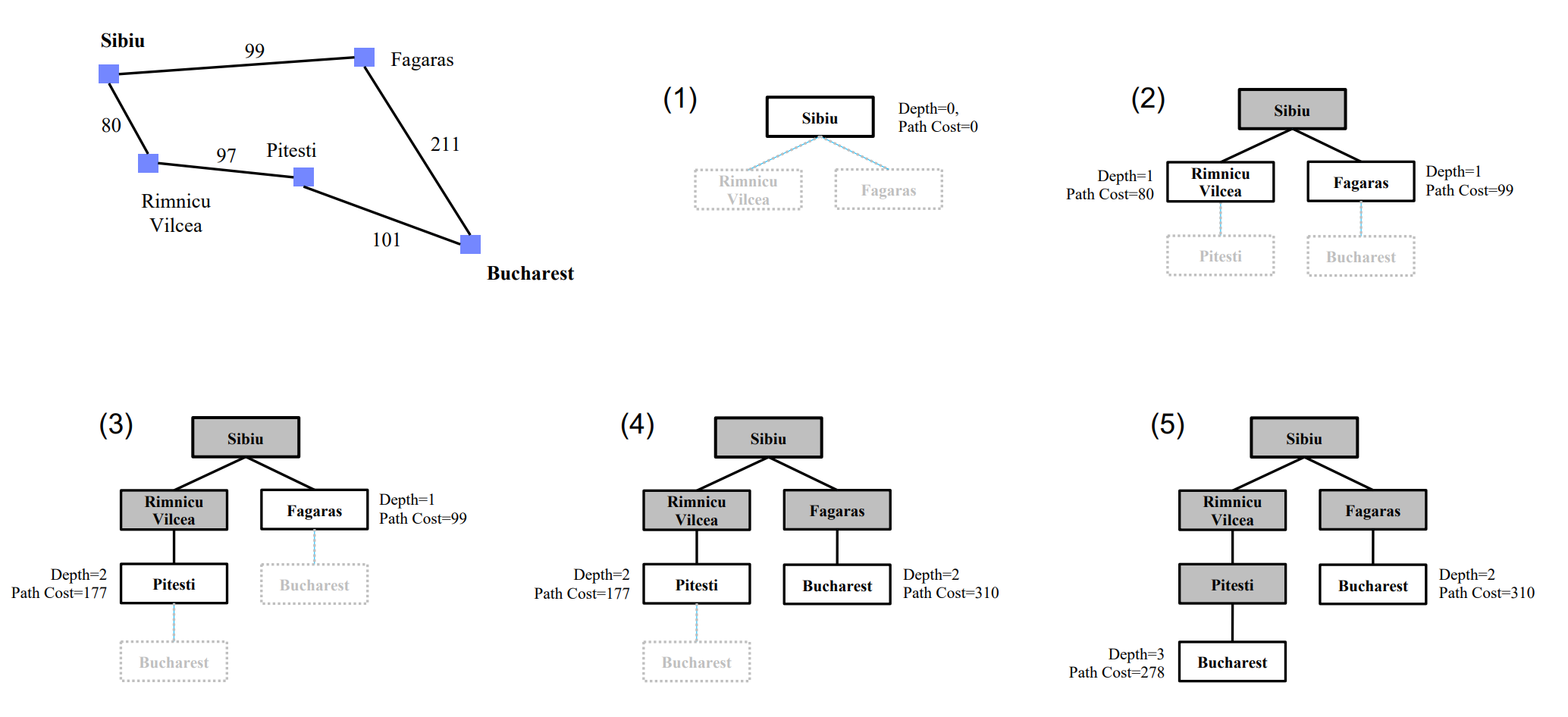
Expand the lowest-cost node next
Analysis:
- Complete: yes, if all step-costs
- Optimal: as above
- Time: , where is # of nodes with cost less than optimum
- Space: as above
Depth-First Search
- Depth-first search (DFS) is a traversal technique used commonly for rooted trees and graphs
- It explores as deeply as possible before backtracking
- For rooted trees, it starts at the root and traverses to a leaf
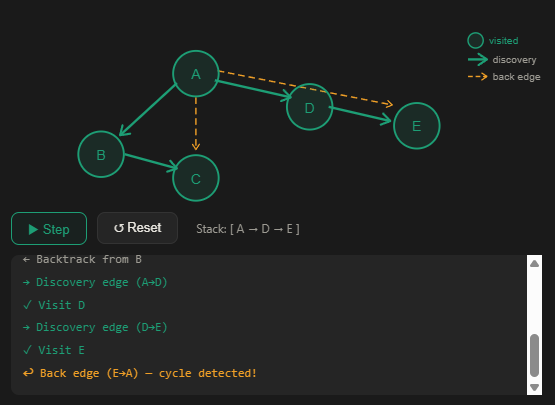
As DFS explores, edges get classified:
- Discovery edge leads to an unexplored vertex
- Forms the DFS spanning tree
- Back edge leads to an already-visited vertex
- Indicates a cycle in the graph
DFS of a graph , must start at a vertex, known as
- If we encounters every vertex in the graph, then is a connected graph
- Otherwise, DFS must be called for every connected component of
Link to original
Depth-Limited Search
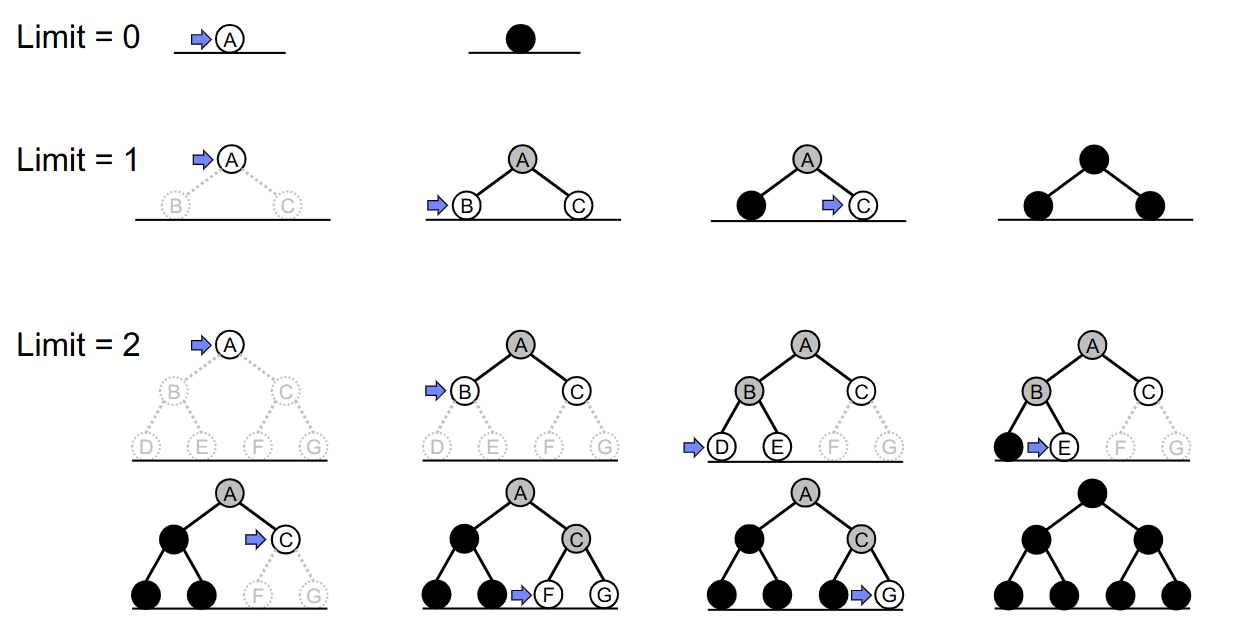
- Variant of depth-first search, but with a cut-off depth
- Works well when you have limited resources
Iterative Deepening Depth-First Search
- Repeated depth-limited search, with increasing cut-offs
- Generally, a good default search algorithm
Bi-Directional Search
- Search from both ends (initial state and goal state)
- Usually expands many fewer modes than unidirectional
- Raises many other difficulties (e.g. goal state may be unknown)