Graph Concepts Recap
Subgraphs
-
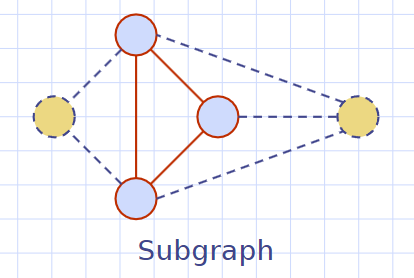
Subgraph vertices and edges are subset of larger graph
-
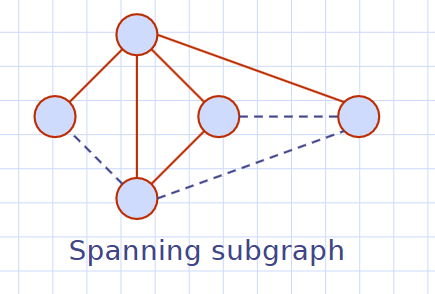
Spanning subgraph subgraph that contains all vertices of graph
Connectivity
-
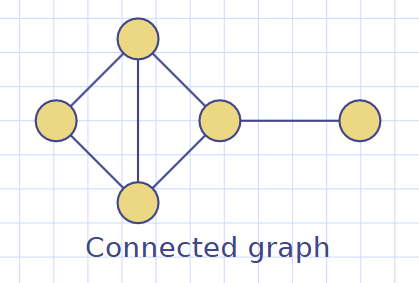
A graph is connected if there is a path between every pair of vertices
-
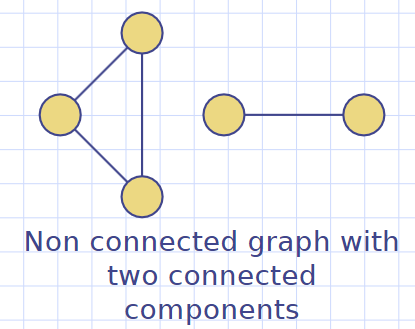
A connected component is a maximal connected subgraph
Trees and Forests
-
A free tree is an undirected and connected graph with no cycles
- Different from rooted tree!
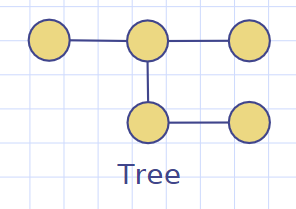
-
A forest is an undirected graph without cycles
- i.e. it is composed of smaller trees (and possibly lone vertices)
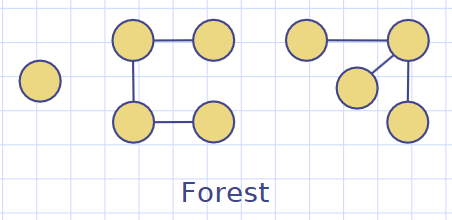
-
A spanning tree is a tree that is also a spanning subgraph
- The edges must be chosen carefully to prevent cycles
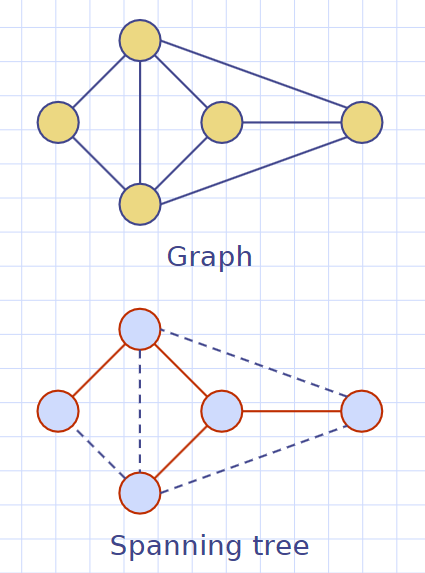
-
A spanning forest is a forest that is also a spanning subgraph
Depth-First Search
- Depth-first search (DFS) is a traversal technique used commonly for rooted trees and graphs
- It explores as deeply as possible before backtracking
- For rooted trees, it starts at the root and traverses to a leaf
As DFS explores, edges get classified:
- Discovery edge leads to an unexplored vertex
- Forms the DFS spanning tree
- Back edge leads to an already-visited vertex
- Indicates a cycle in the graph
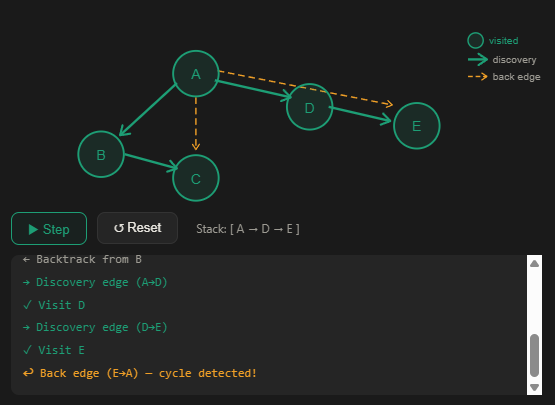
DFS of a graph , must start at a vertex, known as
- If we encounters every vertex in the graph, then is a connected graph
- Otherwise, DFS must be called for every connected component of
Properties of DFS
- Property 1 visits all vertices and edges in the connected component of
- Property 2 discovery edges form a spanning tree of the connected component of
Complexity Analysis of DFS
Assuming we are using an adjacency list representation:
| Operation | Cost |
|---|---|
| Label a vertex or edge | |
| Each vertex labeled twice (UNEXPLORED → VISITED) | total |
| Each edge labeled twice | total |
incidentEdges called once per vertex | total |
| Total |
Applications of DFS
- Path finding find a path between two vertices
- Push vertices onto a stack
S - When you hit your destination, return
S.elements()→ path
- Push vertices onto a stack
- Cycle Detection find a simple cycle
- Wait until a back edge is found
- Then pop stack until original vertex is reached
- Popped elements form the cycle