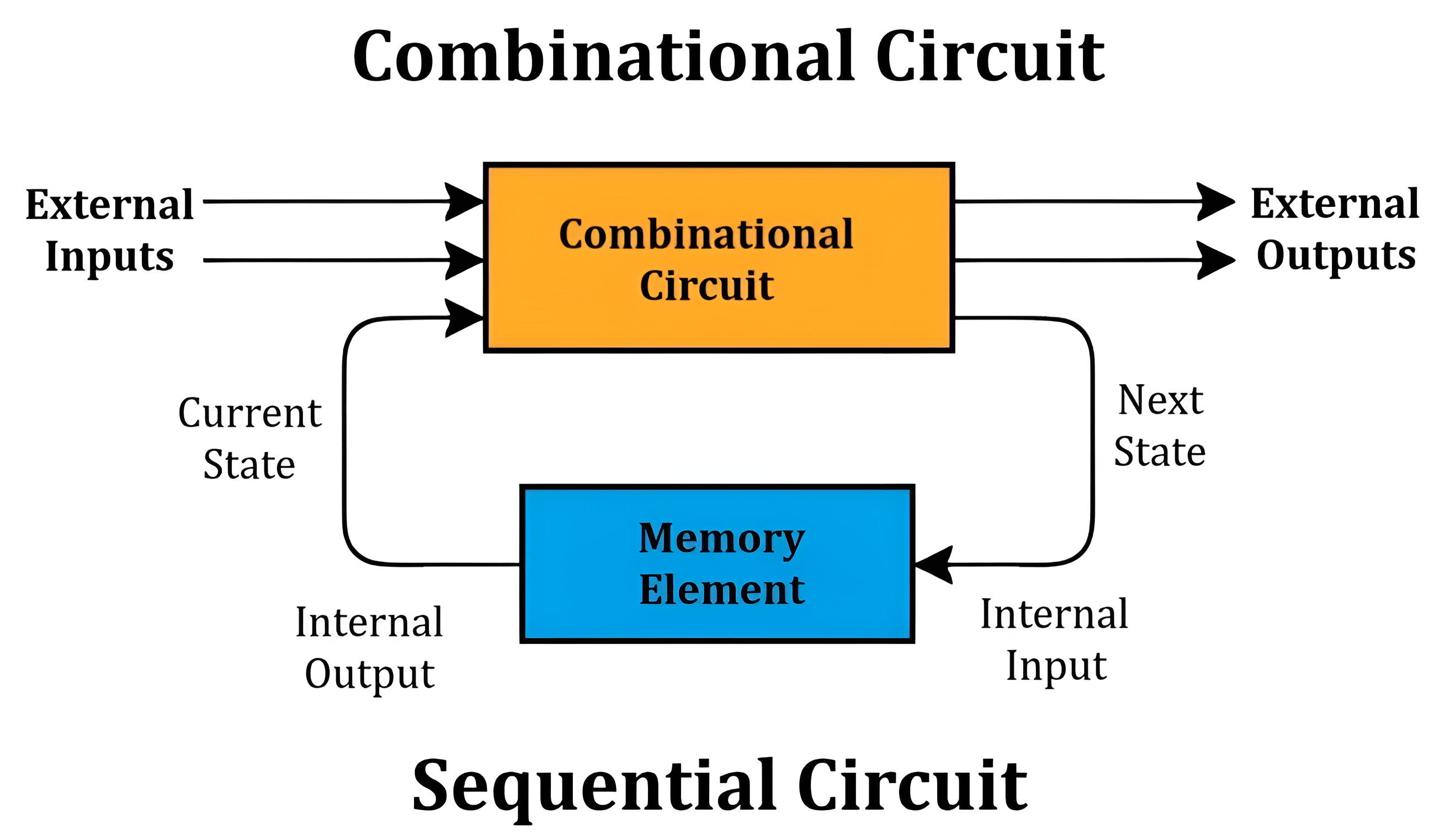
A sequential circuit combines combinatorial logic with memory elements. The memory elements are used to store the circuits ‘state’, which is a representation of its current operating condition.
Outputs of a sequential circuit depend on both inputs and the current state of memory. The same inputs can produce different outputs depending on what state the circuit is currently in.
Synchronous vs Asynchronous Circuits
A synchronous circuit uses a Clock signal to update values at discrete times. During normal operation, the memory updates are controlled by the clock. Different electronic devices respond to a clock signal differently, either being level or edge-triggered.
Asynchronous circuits do no use a clock. Stored values change in response to input changes. Due to the unpredictability of propagation delay, they are more difficult to design.
await dv.view("Scripts/topic-backlinks");