Operational Amplifiers
- Operational amplifiers are used to amplify voltage
- Also known as op-amp and difference amplifiers
- Op-amps are non-linear elements
- Used to perform mathematical operations
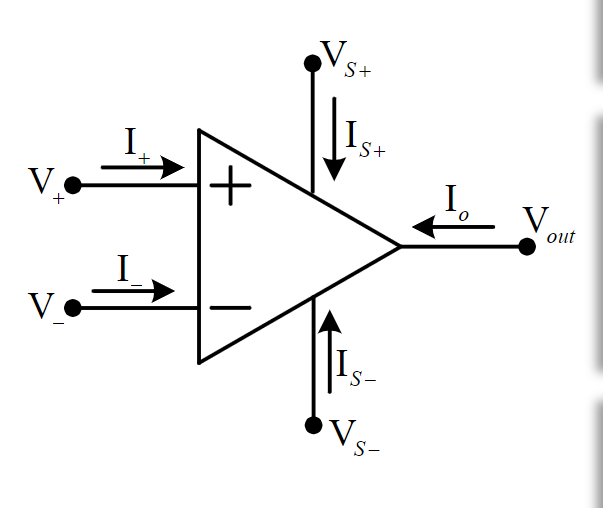
- Two input terminals:
- -> noninverting terminal
- -> inverting terminal
- output voltage at the output terminal
- Should be much larger than input voltage
- and Power supply terminals
KCL of an op-amp:
Equivalent Circuit Model
-
Equivalent circuit model of an op-amp:
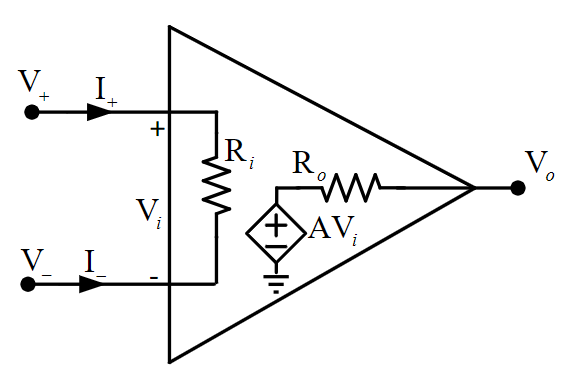
and are ignored, but the op-amp must be connected to a DC power supply to work -
This is a more practical but more complicated model
is the differential input voltage:
is the input resistance of the device
is the output resistance of the device
is the open loop gain -> gain of op-amp with no feedback connection applied in circuit
- Extremely high for most practical op-amps ()
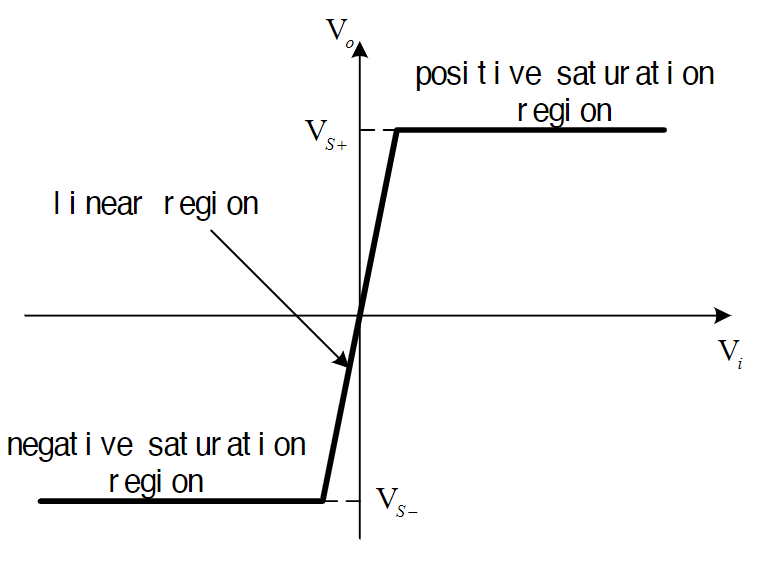
- Linear region: changes linearly with respect to
- Perfect op-amp should only be working in the linear region
- Saturation region: output voltage is limited by power supplies it is connected to → saturates at power supply voltage
i.e. op-amp cannot generate an output voltage that is higher than positive supply or lower than negative supply
Ideal Op-Amp Model & Golden Rules
-
Ideal → easier model
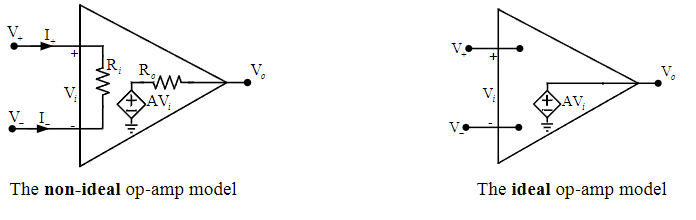
-
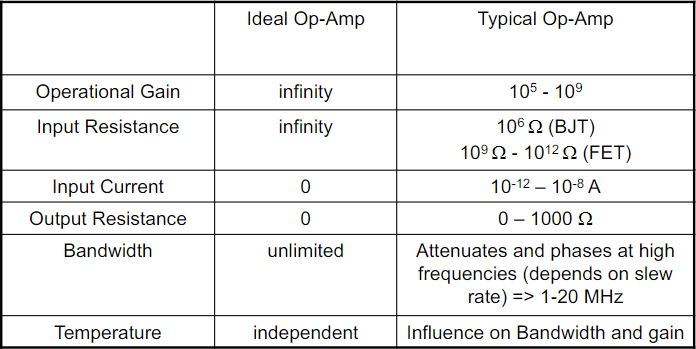
An ideal op-amp is an amplifier with infinite open-loop gain, infinite input resistance, and zero output resistance
- Infinite open-loop gain,
- Infinite input resistance,
- Zero output resistance,
-
$ These assumptions lead to what is known as Golden Rules:
These equations are only true for the ideal model
Applications of Ideal Op-Amp
- Two ways to connect op-amp to circuit:
- Open loop
- Closed loop
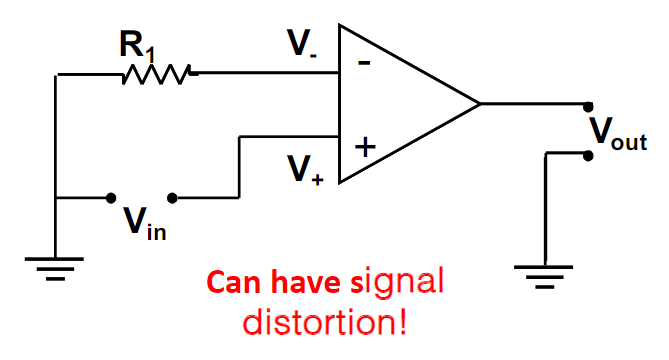
Open Loop no circuit loops that connect output to any input
-
Open-loop configuration is not practical because the very high gain of the op-amp creates poor stability
- Never used
Closed Loop one or more circuit loops connect output to inputs
-
We will use this configuration
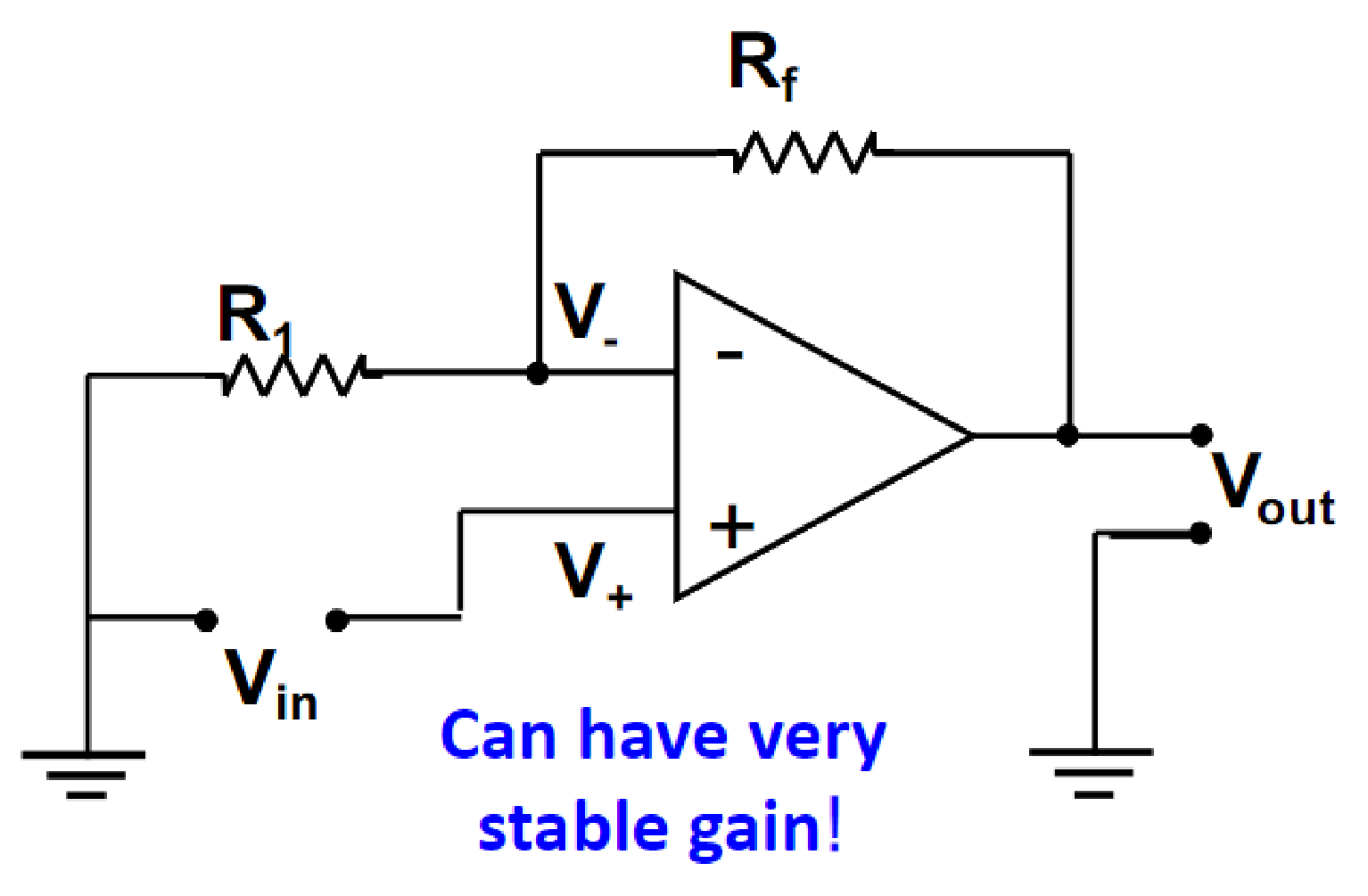
Closed loop gain of the circuit:
output voltage
- You can control output voltage through your resistors:
- If -> short circuit, then
- If -> open circuit, then
Closed loop circuits either negative or positive feedback configuration
-
Positive feedback -> routed back to noninverting terminal
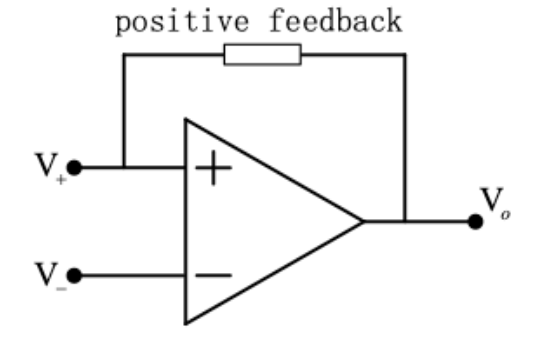
- Input and output voltage have same sign
-
Negative feedback -> routed back to inverting terminal
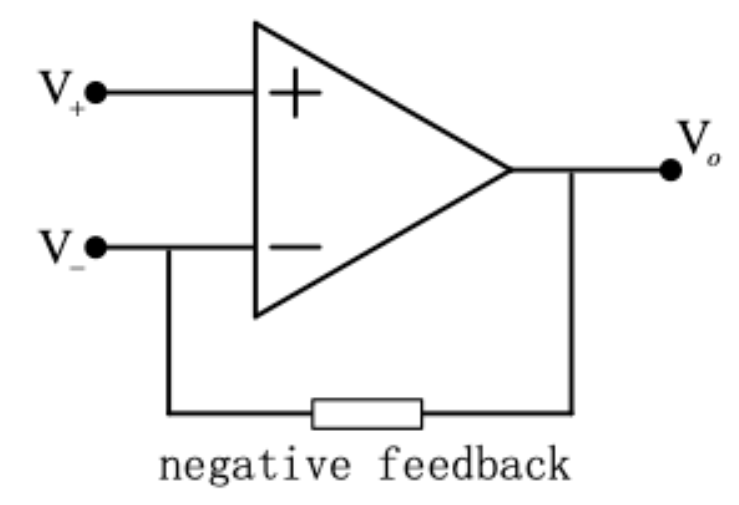
- Input and output voltage have different sign
The only methodologies we use to solve any op-amp question are NTD and the Golden Rules, however, you must never write KCL equations for the output node of the op-amp
- ! Current the flows into the op-amp is either or
Weighted Summing Amplifier
-
Weighted summing amplifier is an op-amp circuit with multiple input voltages where is the weighted sum of the inputs
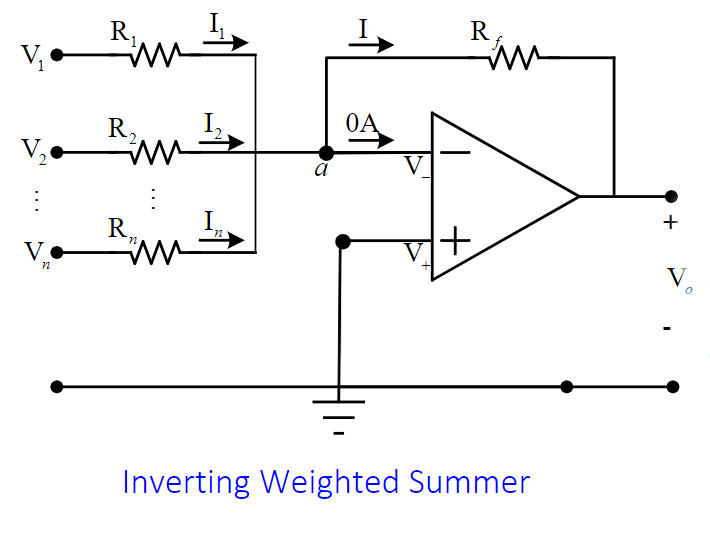
Voltage out for inverting weighted summer: