Fixed Point Numbers
For a number in base :
We can easily convert to base 10:
Signed Binary Numbers
Two’s Complement Representation
- 2’s complement of a binary number is formed by taking 1’s complement of the number and adding 1 to the least significant bit
- Alternate way: complement bits to the left of the rightmost 1
- 1’s complement negates numbers by complementing each bit of the number
2’s complement = 1’s complement +1
Taking the 2’s complement of a binary number negates it (changes its sign)
- Summing the complement of a number with itself should equal 0
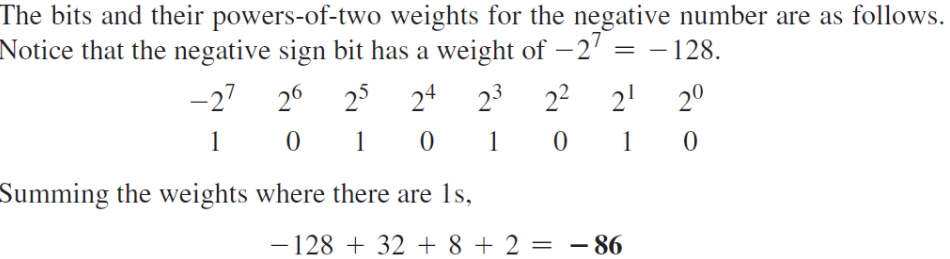
Converting 2’s complement binary to decimal:
- Same process as earlier, but minus away the sign bit
Link to original
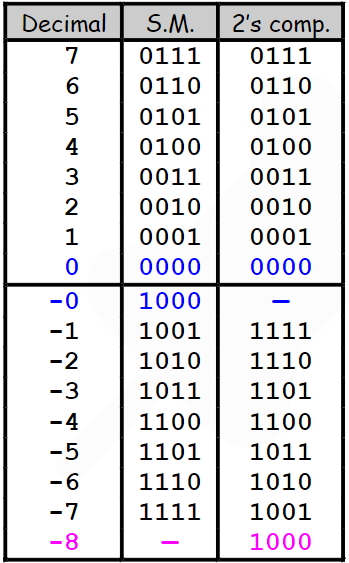
Signed Numbers
Rule of thumb -> the signed negative number for any binary or hexadecimal number when added to itself, equals zero
Floating Point Numbers
-
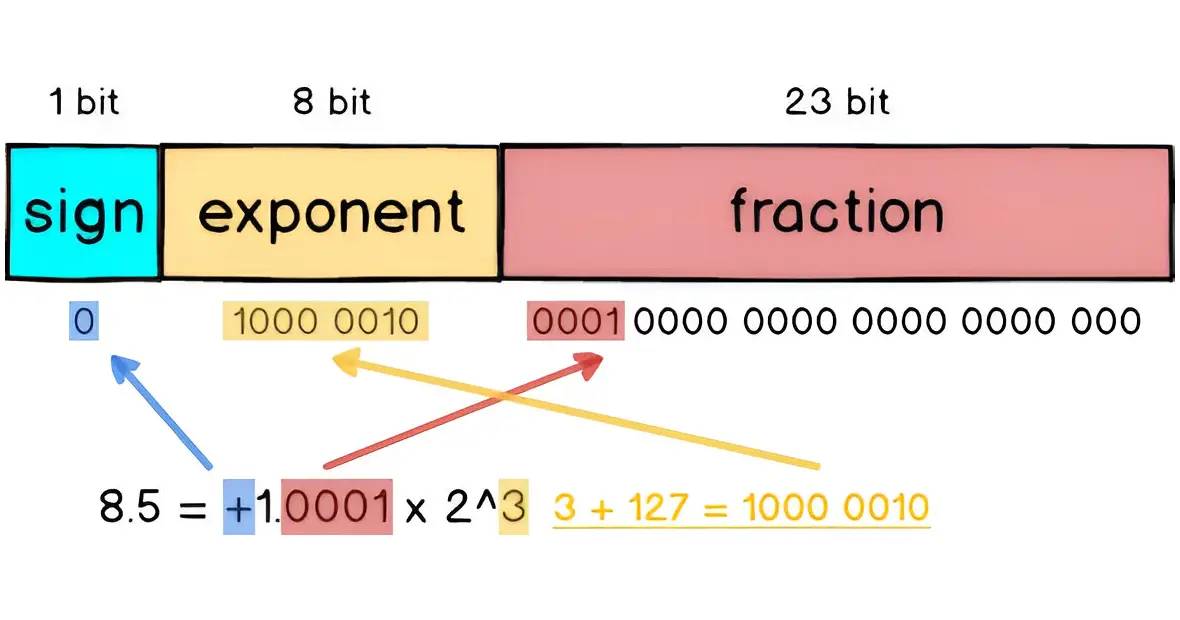
IEEE standard for FP numbers
-
32 bits, single precision:
- 1 bit sign, 8 bits exponent, 23 bits fraction
Special Cases
Exponent = 0
- Fraction = 0 -> result = 0
- Fraction 0 -> result =
Exponent = 255
- Fraction = 0 -> result is infinity
- Fraction 0 -> result is NaN