ENSC1004 - Lecture 21
Life Cycle of Materials - Slides cont.
Life Cycle of Materials
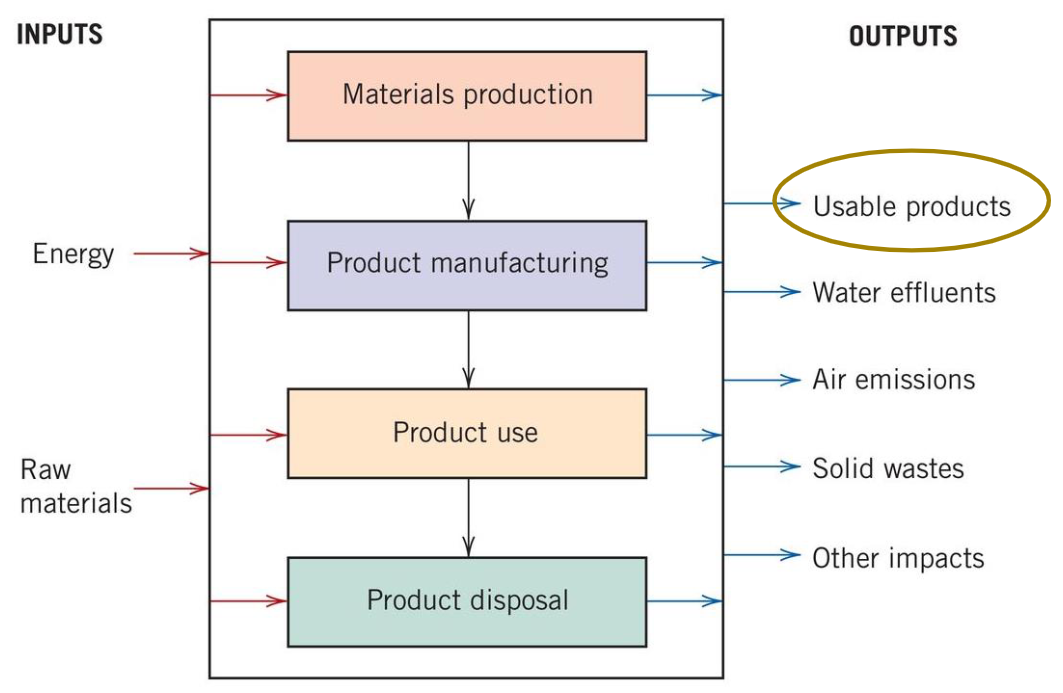
Environmental Impact
- Raw materials → many are finite and non-renewable
- Energy → fossil fuel and nuclear energy are non-renewable
- Energy consumption creates climate change
Environment impact:
- Extraction of materials → ecological damage, energy consumption, pollution
- Material processing → releases pollutants, produces toxic waste
- End of materials life → disposal by incineration creates pollution, landfill creates ecological damage
Engineering Practice
- Two main aspects of engineering practice:
- Achieving a technical function
- Achieving a profit
- In modern economy, also subject to: workplace safety, environmental safety, energy consumption, etc.
Recycling of Materials
From environmental perspective, materials must either be:
- Recyclable
- Biodegradable
Metals and Alloys
- Most experience corrosion → are biodegradable
- Some are toxic → should not be in landfill
- Many are recyclable; difficult to recycle heavily corroded materials
Compared to refining raw ore, reprocessing metals for recycling:
- Consumes less energy
- Produces less pollution/waste
Ceramics Glasses
- Glass is relatively inert and not biodegradable
- Little economic drive to recycle glass:
- Inexpensive raw materials
- Expensive to transport
- Time consuming and expensive to sort
Polymers
- Popular for being chemically and biologically inert
- But this makes them difficult to dispose of
Thermoplastic polymers easy to recycle
- Soften when heated → easy to reshape
- Must be sorted by polymer types
- Properties degrade after each reuse
Thermosetting polymers difficult to recycle
- Will not soften with heat → unable to reshape
- Some may be recycled as filler materials
Elastomers challenging to dispose and recycle
- They are thermosetting polymers
- Often contains many fillers
- Highly non-biodegradable
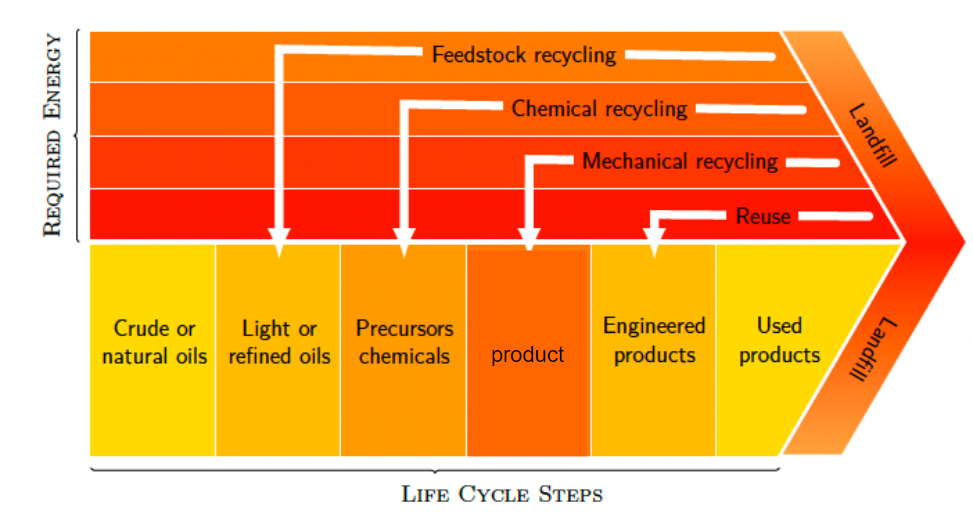
For non-biodegradable and non-recyclable polymers, we need to find ways to 1) reclaim their fuel value and 2) convert them into fine chemicals
Biodegradable polymers designed to degrade naturally
- Typically aimed for niche applications
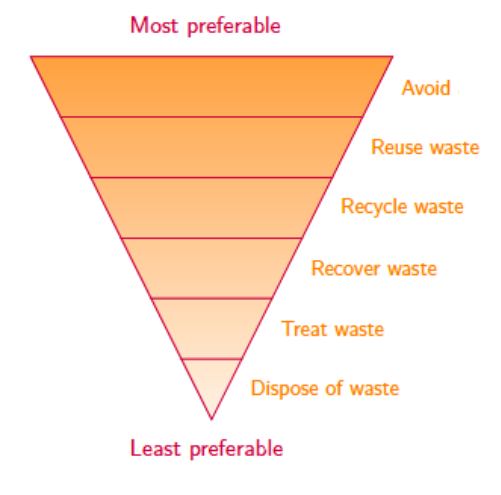
Waste Management Hierarchy
End of Unit!