Structure and Deformation of Polymers
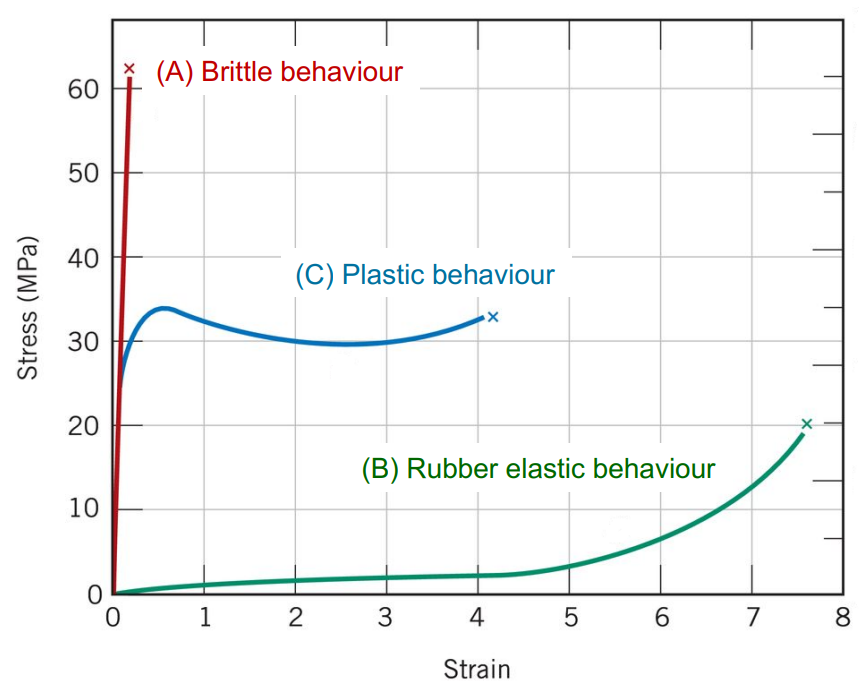
- Due to wide variation in polymer structure, they can have different mechanical properties
- They are classified into 3 stress-strain behaviour types:
- Brittle behaviour
- Plastic behaviour
- Rubber elasticity
Brittle Behaviour:
- Deforms to fracture with little plastic deformation
- Observed in highly crosslinked and networked polymers
- Relative high stiffness, high strength, low ductility
- Inability of molecular chains to slide past each other
Plastic Behaviour:
- Observed in linear and branched chain molecules with semicrystalline microstructure
- Similar deformation behaviour to metals
- Elastic → plastic deformation
Rubber Elasticity:
- Completely elastic, large recoverable strains at low stress
- Elasticity is non-linear, unlike ceramics and metals
- Crosslinked molecular structure
- In unstressed state, chains are highly twisted and coiled
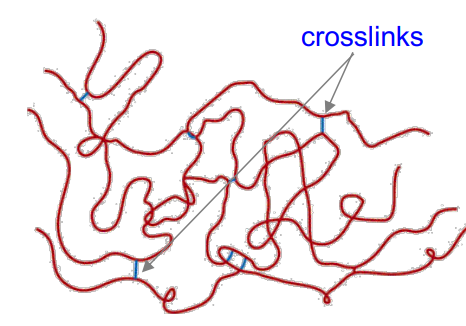
- Upon stretching, chains are uncoiled but cannot slip past each other due to crosslinks
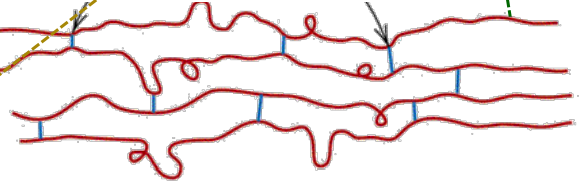
- When load is removed, chains are pulled back to their unstressed state
- In unstressed state, chains are highly twisted and coiled
Density and Mechanical Properties of Materials
- Density of materials are determined by mass of their atoms and how these atoms are packed together
Metals → high density
Ceramics → lower density
Polymers → lowest density
- Metals are heavy and have packed structures with no free space
- Ceramics have a mix of metal and light elements
- No free spaces like metals
- Polymers made of light elements
- Packing is much less dense, more free space
Failure by Plastic Yielding
- Yielding marks onset of plastic deformation
- In many engineering designs, this is not permitted
- Thus, yield strength is used over ultimate tensile strength as design criterion
- In design against plastic yielding, we apply safety factor
- Thus , typically falls between 1.2 to 4
Failure by Fracture
- Fail by a sudden, spontaneous fracture
- Fracture is often propagative
- Can occur before plastic deformation
- Brittle fracture occurs in load bearing and pressurized structures
e.g. bridges and trucks, pressure vessels and gas pipelines- Fracture can occur due to ductile-to-brittle metal transition
- Fracture occurs when the energy stored in the system surpasses the energy criterion of fracture
- Typically, fractures occur due to tensile stress
Energy Criterion of Fracture
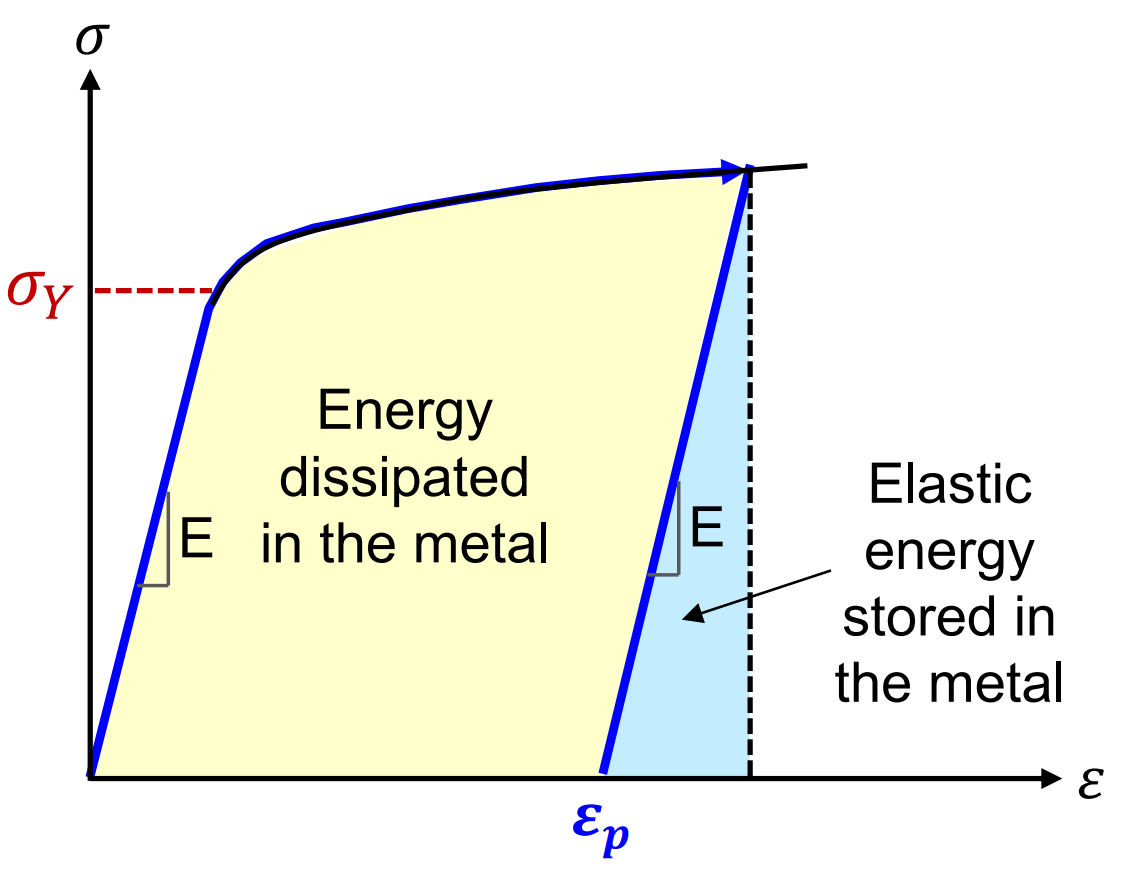
- For a fracture to take place, the stored energy must be greater than the energy criterion of fracture
Graph Example: - Yellow area dissipated energy
- Energy cannot be used to do work
- Blue area elastic energy (stored)
- Energy can be released to do work
e.g. fracture the material
- Energy can be released to do work
Modes of Fracture
- Brittle fracture little to no plastic deformation
- Ceramics, high strength steels and brass
- Ductile fracture excessive plastic deformation
- Most polymers and pure and soft metals
- Mixed fracture mix of both
- Carbon steels and other alloy
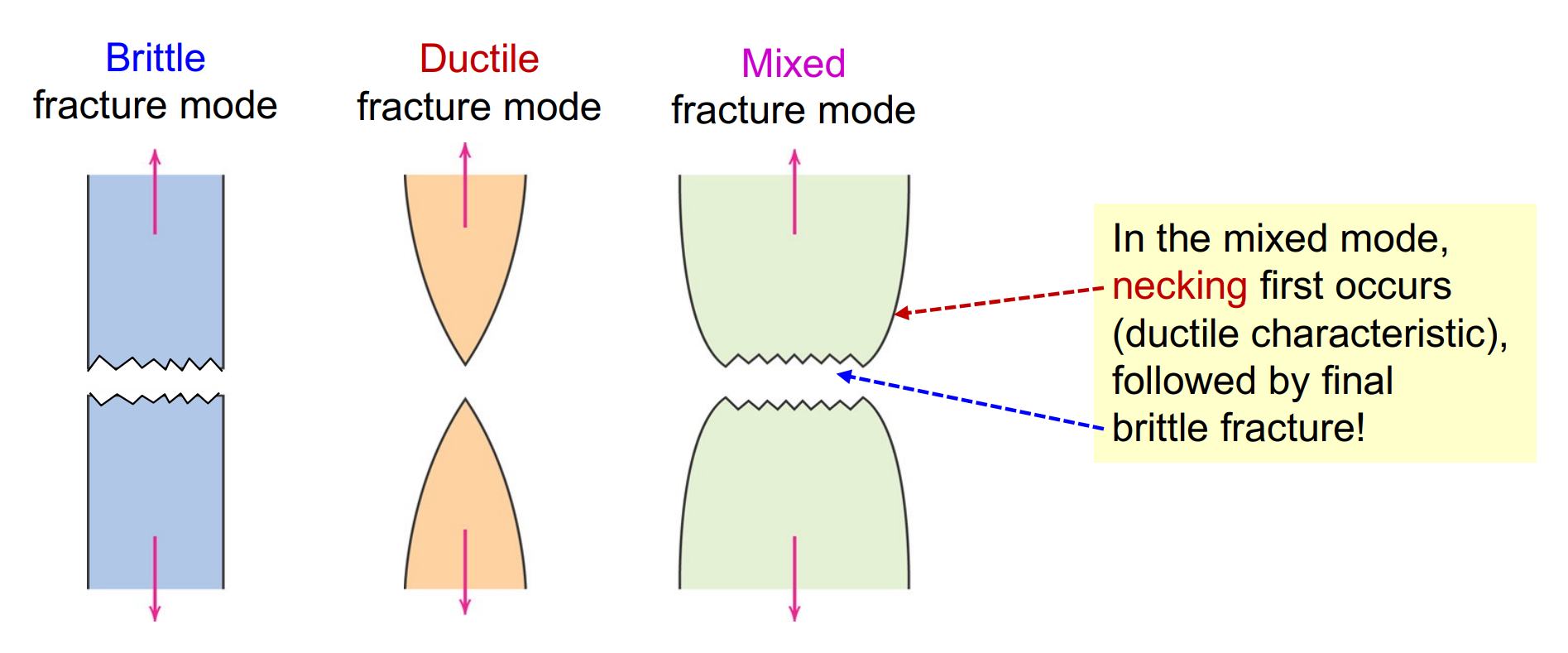
Brittle Fracture
- Low energy absorbed by fracture
- No ‘necking’
- Flat fracture surface morphology cleavage fracture
Stress is uniform at low applied load, when the applied stress is high enough, cracks form and propagate through the material
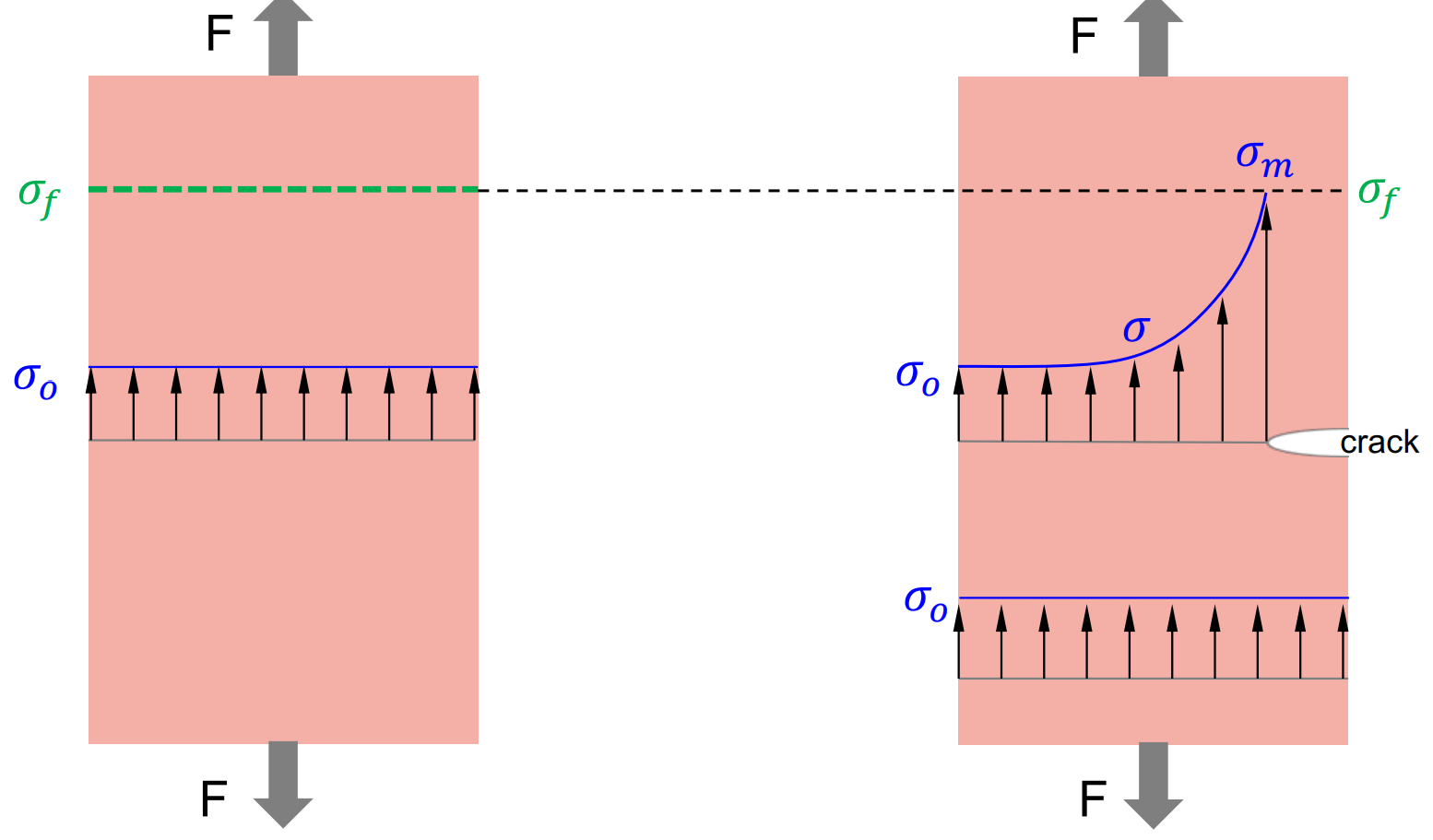
- Propagation occurs when stress at crack tip fracture strength
Ductile Fracture: - High energy absorbed by fracture
- ‘Necking’ gives early warning signs of fracture
- ‘Cup-and-cone’ fracture surface morphology
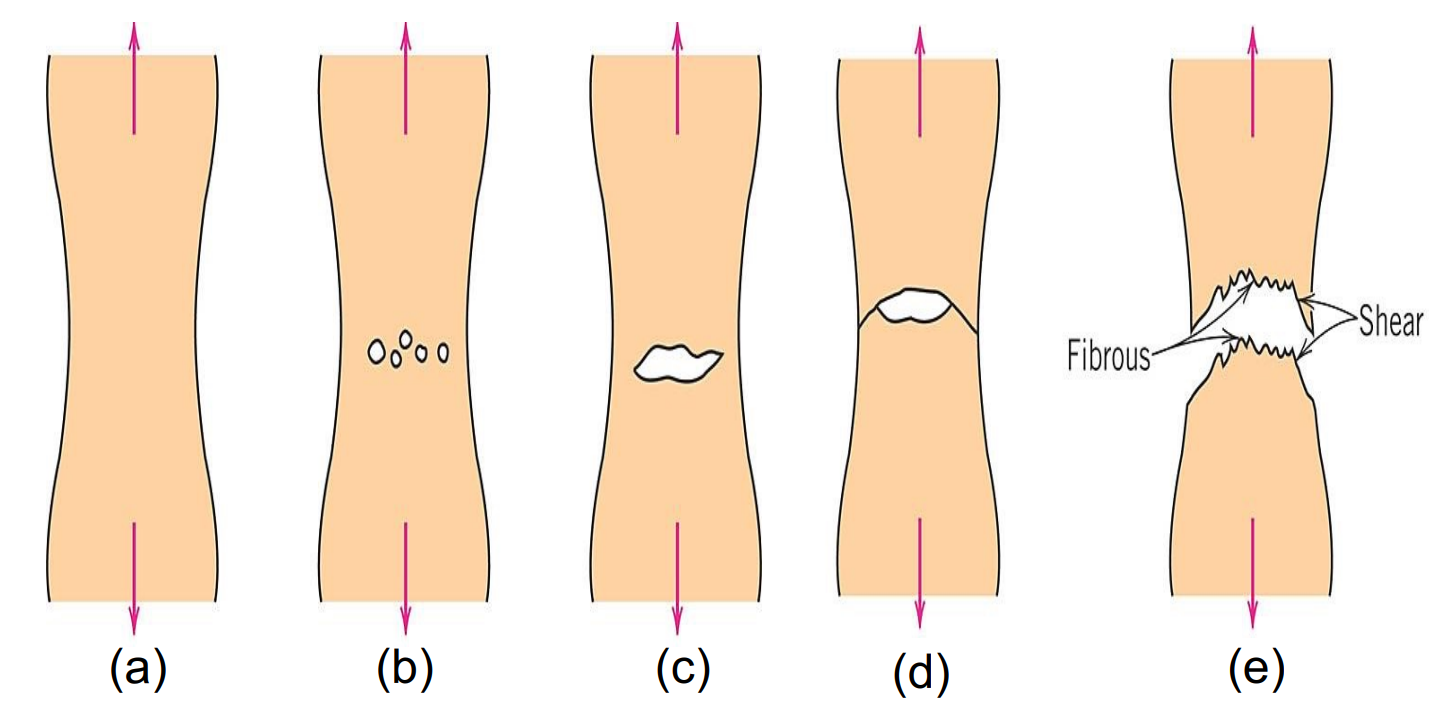
Ductile materials fail at the yield strength which is lower than fracture strength