AVL Trees
- An AVL tree is a binary search tree (BST)
- Every internal nodes’ children can only differ in height by at most 1
- If this condition is not met, the tree is unbalanced
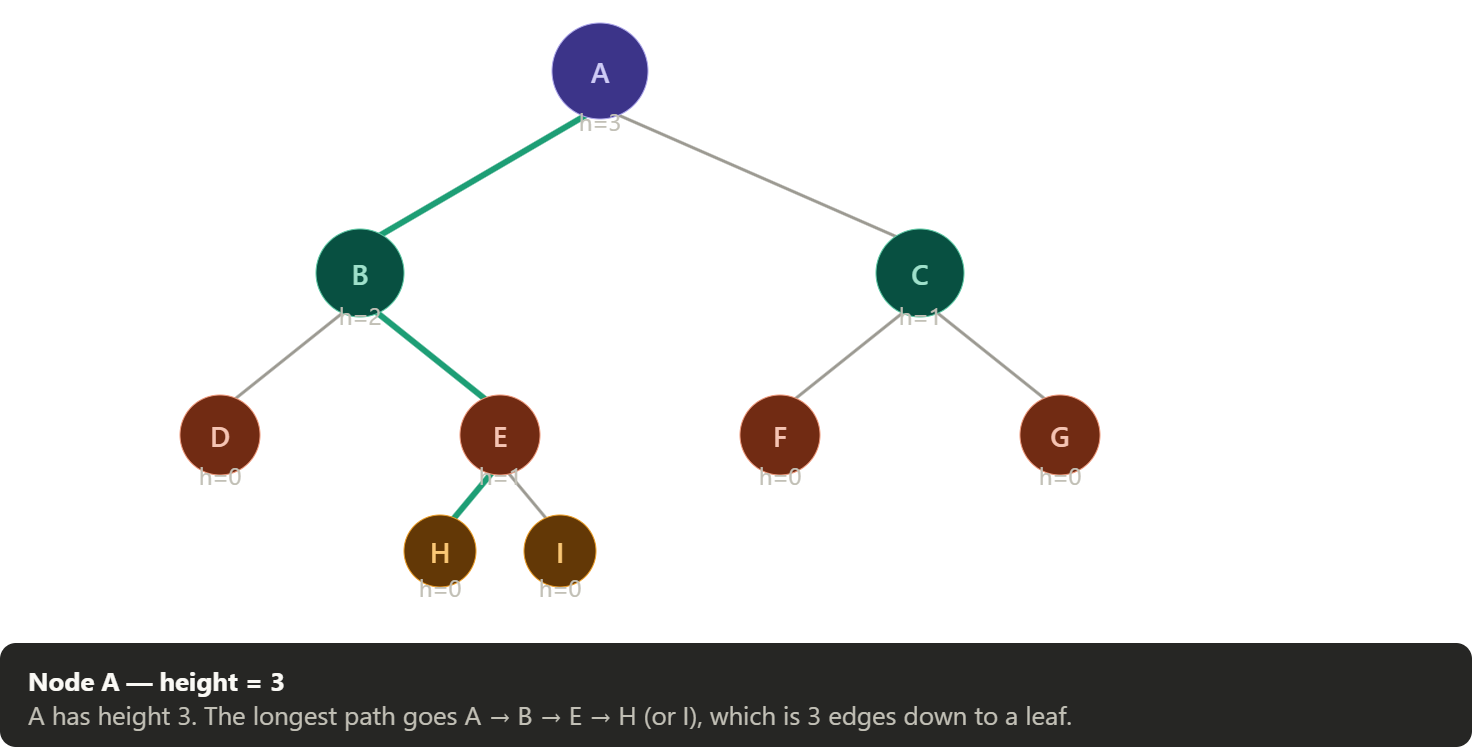
- Height of an AVL tree is
⚡ Named after inventors Adelson-Velsky & Landis (1962)
Insertion & Imbalance
- Always done by expanding an external node
- When a node is added, it may lead to the tree being unbalanced
- The tree then needs to be restructured
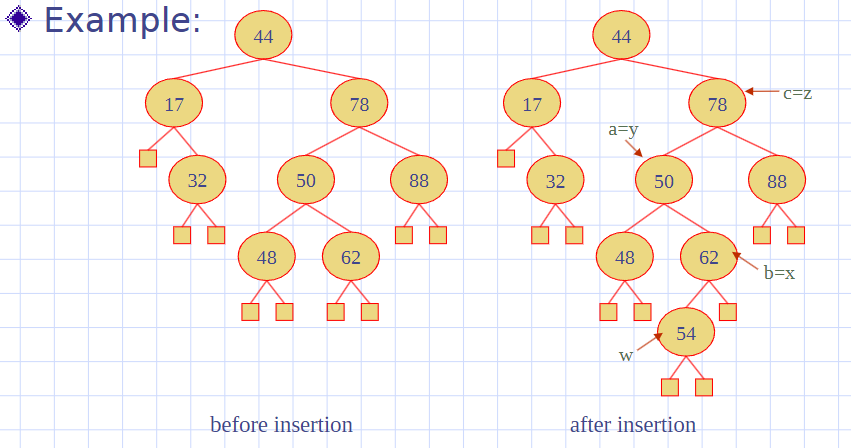
- The tree on the right is unbalanced:
Node 78: , butNode 17:- difference between siblings
- tree is unbalanced
Restructuring process:
- Identify problem nodes:
- highest unbalanced node →
node 78 - child of with the larger height →
node 50 - child of with the larger height →
node 62
- highest unbalanced node →
Trinode Restructuring
- To restore balance, we perform rotations
- Let be an inorder listing of
- Inorder listing → Left-Root-Right
- node will become parent node for and
- Two main scenarios:
- Single rotation form a straight line
Left rotation about :
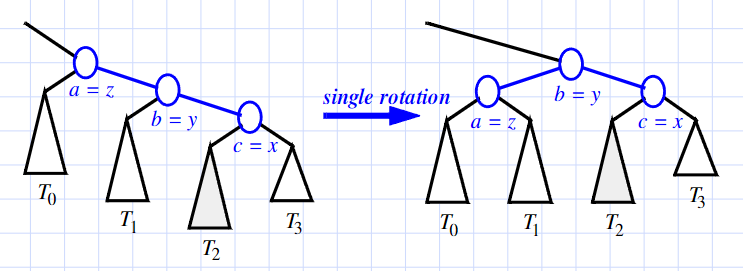
- Double rotation form a zig-zag
- Single rotation form a straight line
- Only one rebalancing step is required for insertion
Removal
Initial step do regular BST deletion:
- Case A: Node is a leaf → delete node
- Case B: Node has one child → replace node with child
- Case C: Node has two children
- Replace node with in-order successor
- In-order successor is smallest node in right subtree for BST
- Then, delete that successor
- Replace node with in-order successor
Retracing and Rebalancing
- After node is gone, retrace path from deleted node’s parent up to root
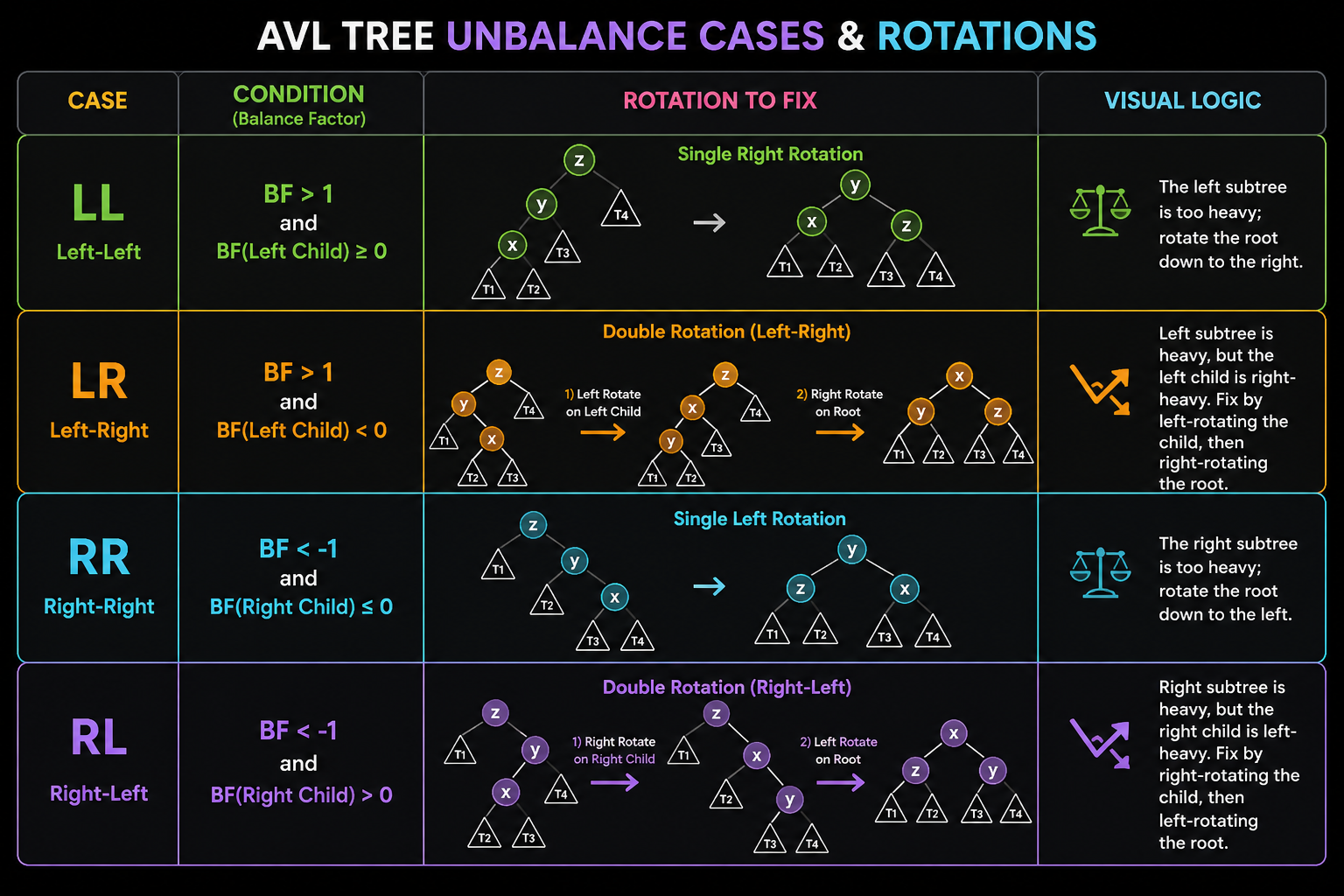
- Check each nodes balance factor BF:
- If , the node is unbalanced
- Four rotations we can perform to fix this, as seen in the table below ↓
AVL Tree Performance
- Single restructure
- Searching
- Insertion
- Removal