Introduction to Processes
- Process = a program that is currently running
- Each process has:
- A process ID (PID)
- A parent process → the process that created it
At boot, system creates the “first” process →
init(PID = 1)
Every other process is a child of something else
If a process’s parent dies, the child is “adopted” byinit
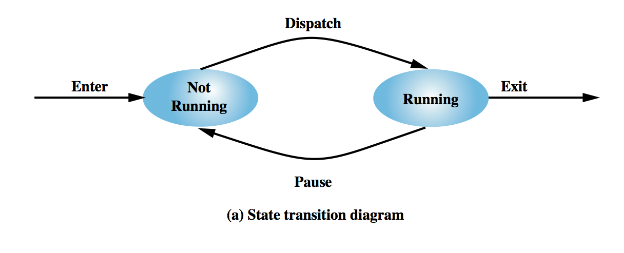
- Processes are either in the Running or Ready state
- Finished processes are considered terminated
- Up to operating system to manage processes between the two states
Process Creation
- OS must allocate resources for both process and itself
- Process needs memory when it initially is created
- But also needs memory for execution stack and heap
- OS needs memory to support process stage transitions
- Different OS support process creation differently
- Linux and macOS →
fork()to duplicate existing processes - Windows → instantiating a process’s image from named location using
CreateProcess()
- Linux and macOS →
Process Termination
- Many reasons why a process may terminate:
- Execution time-limit exceeded
- Resource request unavailable
- Arithmetic error (divide by zero)
- Memory access violation
- Parent process terminated
- Process termination may be request when a process is either Running or Ready → OS needs to handle both cases
- If process is a math function, its return result is generally made available to other processes
Timer Interrupts
- When to shift states? → OS has two goals to ensure fairness
- First goal is simple to achieve:
- Enable each process to execute for predetermined period before moving Running process to Ready state
- Max time allowed to run is known as time quantum
- Hardware timer generates interrupt periodically
- Processes that continually execute to the end of their time quanta are known as computer-bound processes
Blocking Processes
- Not all processes are computer-bound processes
- What happens when they make an I/O request?
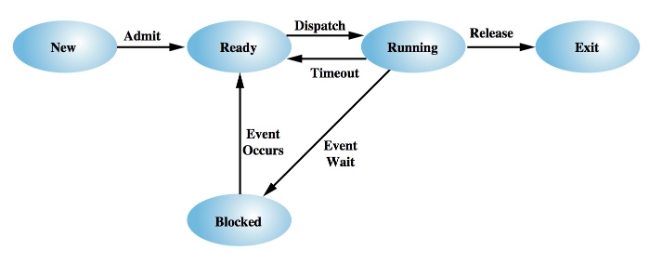
- The process must be placed into a new state called Blocked
- Here, the process waits until the I/O is fulfilled
- Then, it is moved back to Ready state afterwards
5-State Model of Process Execution
- Two new states:
- New new processes which aren’t yet admitted to Ready state
- Exit terminated processes whose result may be required for other processes
- Each state likely to hold more than one process except for Running
Suspension of Processes
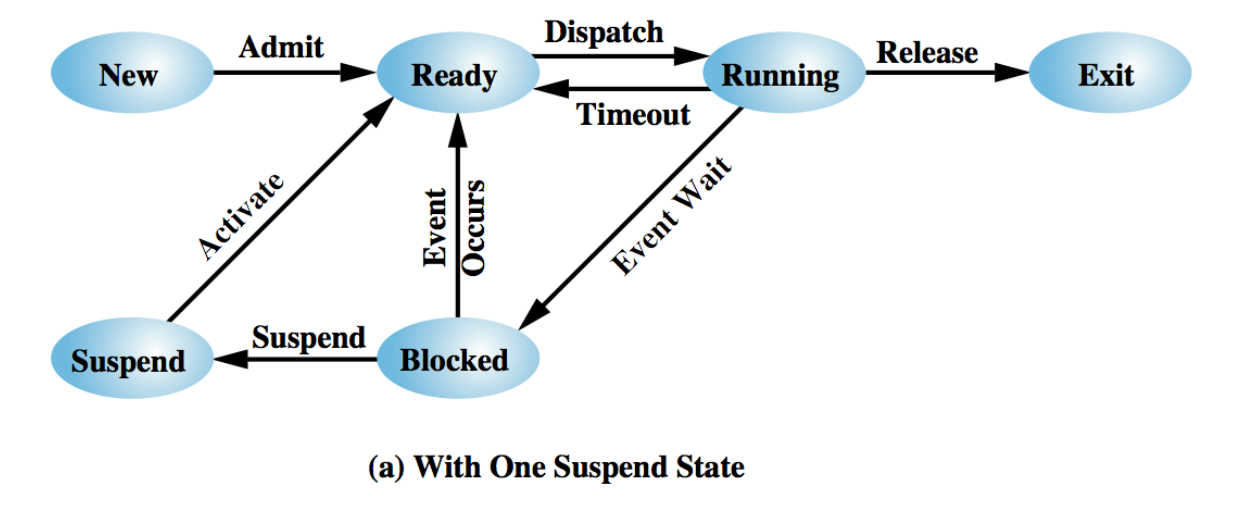
- To suspend a process → move it out of RAM & into secondary storage
- Saves memory so that we can run more processes
- Processes blocked waiting for I/O can be suspended
Swapping of Processes
- This can be further applied to suspending Ready processes when we run out of main memory
- This adds two more states:
- Ready/Suspend
- Blocked/Suspend
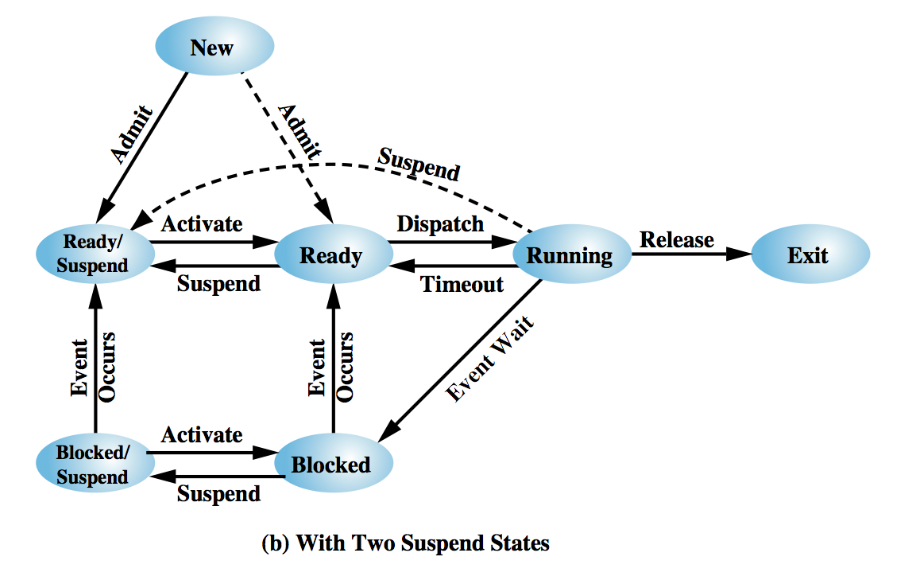
Processes can be freely moved around depending on whether memory is needed to be freed up, I/O requests are received or we are ready to handle suspended processes.